A business rules engine (BRE) is a tool for automating and managing a company's business processes and rules in one central place. Business rules are based on logic. They can be defined, added, changed, analysed and checked at any time. Actions are triggered by fixed if-then conditions. This makes rules reusable and replaces manual data maintenance. Most of all, a BRE speeds up recurring tasks and rule changes through process automation.
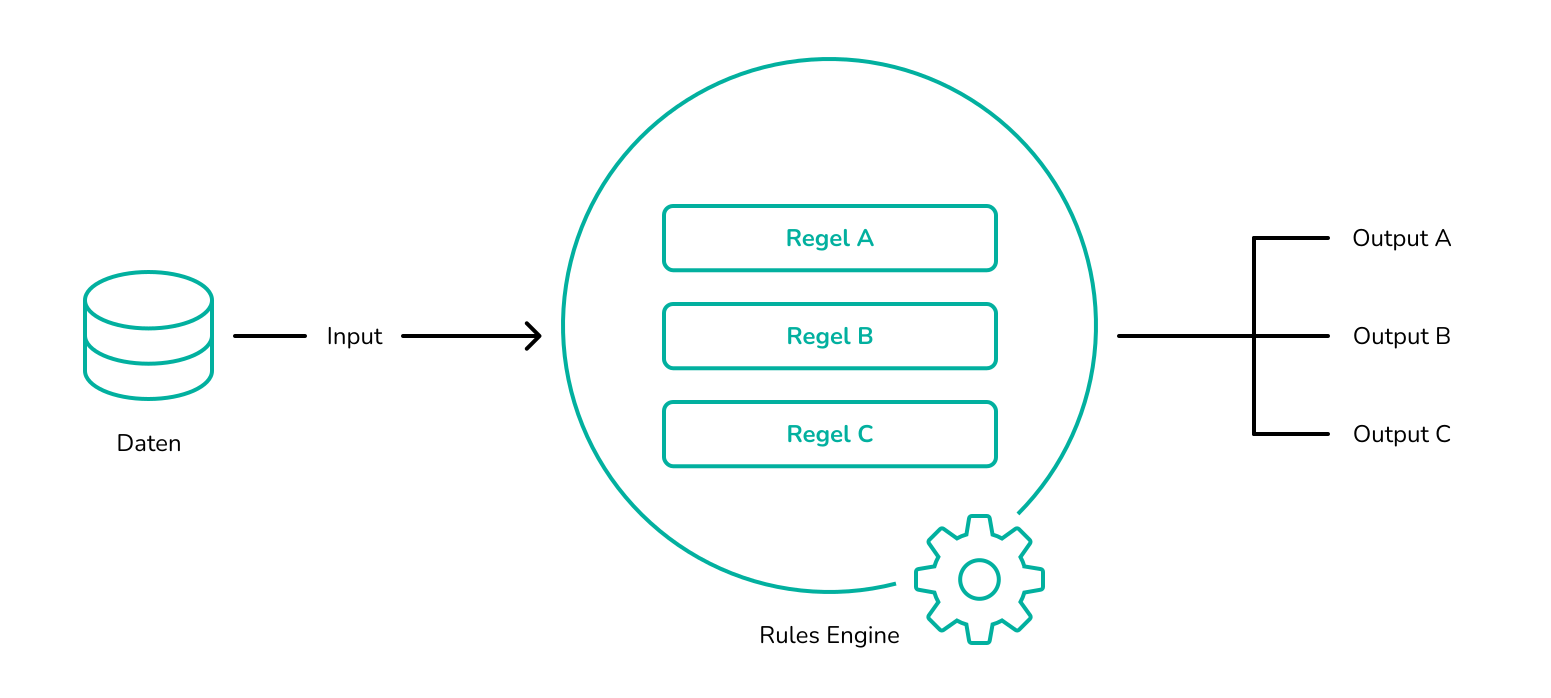
A business rules engine uses imported data as the basis for its rules. These rules can be linked to different applications to trigger the actions you need there.
A business rules management system (BRMS) is the platform where a rules engine creates and runs business rules, separately from the applications that use them. Managing, testing and versioning these rules is called business rules management. In a BRMS, all business rules are stored and managed centrally, independent of external programs. A business rules engine is especially useful for companies that work with large and varied databases, because it saves time, cost and resources.
What are business rules?
Every day, millions of decisions have to be made. In most cases, they are based on rules that were set for the business system and a defined decision logic. Business rules describe how a company decides in certain situations. They exist in almost every area of a company and are as varied as the company itself. With simple if-then conditions, business rules make processes simpler and faster.
Examples of business rules:
- Sales has to set the credit limit for a new customer.
- HR has to decide whether an applicant moves on to the next step.
- Someone has to check that all policies are followed.
- Purchasing has to decide whether a supplier meets certain requirements.
A concrete example of a business rule in customer service:
IF a customer navigates on the FAQ page of a company,
THEN assistance is offered via a chat bot.
This reduces the number of requests, because the chatbot answers many questions in advance. It takes work off the support team.
What are the benefits of a business rules engine?
A business rules engine automates business rules and processes. This creates dynamic processes that you can design quickly and flexibly. Because the rules can be adjusted, they can be reused across the whole company and replace old lists. Multi-source control lets you automate processes based on data from many different sources. With a BRE, you can analyse, improve and measure this data and these processes.
A business rules engine makes you less dependent on the IT department, because rules are easy to define and change. Changes can be made right away and for each case. Errors from manual data maintenance go down. Fewer errors and consistent rule compliance also mean more security. Business rules engines also help to control complex logic in systems that use artificial intelligence.
A business rules engine can be used in many ways, for example for pricing in an online shop, for approving travel expenses or for following regulations and policies.
Business rules engine vs. workflow engine
A business rules engine makes decisions, a workflow engine controls processes. The workflow engine decides which step comes next and who is responsible. At decision points, it asks the rules engine which result applies to the case. In employee onboarding, for example, the workflow engine sets the order of the steps. The rules engine decides which access rights are given, based on role, location and department.
In practice, the two usually work together rather than replace each other. To learn how a workflow engine controls processes and when you need which, read our article on the topic.
What can swoox.io do?
swoox.io is a low-code platform for process automation. The business rules engine is one part of it: it searches, filters, structures and compares large amounts of data and processes them based on logical conditions. This is the basis for processes that you can digitise and automate, for example in marketing, customer service or dynamic pricing.
In swoox.io, rules and processes work together: you model processes with the BPMN software, and the Rules Manager makes the decisions. Because the rules are separate from the code, business teams can change them without programming skills and without an IT ticket.
How it works in practice: the swoox.io Rules Manager
The Rules Manager is the business rules engine component of swoox.io. It lets you use the ideas above without any programming:
- Segment Tree: Data is broken down hierarchically into segments, so complex target groups or datasets can be structured clearly.
- Filter Builder: Rules and filter conditions can be assembled visually to segment datasets by any criteria.
- Action Editor: For every rule set that matches, you define which action gets triggered – for example, handing off to a Workflow Engine or a connected system.
- Scheduler: Rule sets can run on a defined schedule, so large datasets are updated automatically and regularly.
The result is useful, always up-to-date segments built from your company data, for example for dynamic pricing, automated approvals or personalised customer communication. Learn more: swoox.io Apps – Rules Manager
Frequently asked questions about business rules engines
When do I need a rules engine?
Whenever your decision logic changes often and you do not want every change to become an IT ticket. Typical examples are dynamic pricing, credit checks, compliance checks and personalised recommendations.
What is the difference between a rules engine and hard-coded logic?
Hard-coded logic sits inside the source code, so every change needs a developer. A rules engine separates the logic from the code and lets you change it in a user interface.
What are examples of business rules?
Typical business rules are discount rules in an online shop, approval limits for invoices or criteria for granting credit. They almost always follow an if-then pattern.
Do I need programming skills for a business rules engine?
No. Low-code solutions such as swoox.io let you define, test and change rules in a visual interface.


We would be happy to show you how easy and flexible process automation with swoox.io is.
Or you can try it out for yourself right away.